 List
List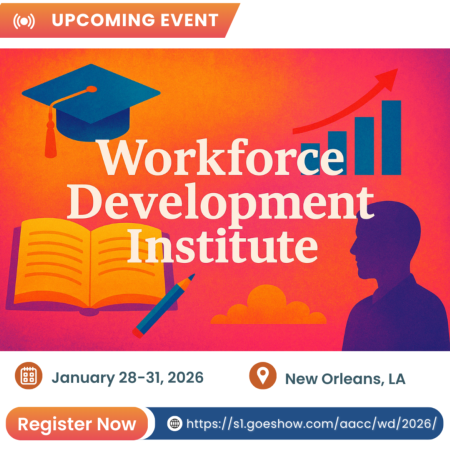
ATE is Advanced Technological Education. With an emphasis on two-year colleges, the National Science Foundation's ATE program focuses on the education of technicians for the high-technology fields that drive our nation's economy.
Community Conversations: Reflecting on 2025 – Lessons Learned
Meeting
December 16 Online
In this community conversation, ATE PIs, project evaluators, and staff will reflect on the lessons learned throughout 2025 and discuss how these insights can be applied to enhance evaluation practices moving forward.
(View More)
Hawaii International Conference on System Sciences
Conference
January 6 Lahaina, HI
Since 1968, the Hawaii International Conference on System Sciences (HICSS) has been known worldwide as the longest-standing working scientific conferences in Information Technology Management. HICSS provides a highly interactive working environment for top scholars from academia and the industry from over 60 countries to exchange ideas in various areas of information, computer, and system sciences. According to Microsoft Academic, HICSS ranks the 36th in terms of citations among 4,444 conferences in all fields worldwide.
(View More)
Scouting America Badging Day
Student Event
January 10 Thief River Falls, MN
Scouting America Merit Badge Day will be held at Northland Community & Technical College. Scouts will have the opportunity to participate in a variety of engaging classes, including Aviation, First Aid, Welding, Law Enforcement, and Citizenship in the Nation. This event is designed to give Scouts hands-on learning experiences while working toward their merit badges.
(View More)
KidWind - Wind Energy 101
Workshop
January 10 Online
Join for this wind-focused, three-hour virtual workshop to explore the science of wind power!
During this virtual workshop, educators will learn the foundations of wind power including the science and technology of wind turbines and blade design. Presenters will also introduce activities for the classroom that engage students in dynamic, hands-on energy-based learning.
Registration closes December 27th so you receive materials prior to the workshop.
(View More)
Generative AI and Microsoft Copilot Training for Community College Faculty and Staff: 101
Webinar
January 15
This session is designed for community college faculty and staff exploring the fundamentals of Generative AI and Microsoft Copilot. Topics include Generative AI and responsible AI use, effective prompting techniques, and real-world applications in education. This session will provide practical insights and hands-on guidance to help integrate AI tools into your work.
(View More)
Google's Generative AI Leader Training and Certification
Meeting
January 16 Online
Become one of the first go-to resources and thought leaders in Generative AI Leadership, enhancing your visibility and influence within the organization. This no-cost opportunity, funded by Google Cloud’s Career Launchpad, and in collaboration with NAAIC, will prepare community college faculty for the Google Cloud Generative AI Leader certification.
The training will cover:
- Fundamentals of Gen AI
- Google Cloud's Gen AI offerings
- Techniques to improve Gen AI model output
- Gen AI business strategies
Training sessions
Session 1: January 16, 2026, 10 to 4:30 PM EST, online
Session 2: January 23, 2026, 10 to 4:30 PM EST, online
Office hours (optional): January 30, 2:30 to 4 PM EST, online
Certification exam deadline: January 31, 2026
(View More)
SPIE Photonics West 2026
Conference
January 19 Online
SPIE Photonics West is the premier event for lasers, biomedical optics, optoelectronics, and technologies supporting biophotonic, quantum, and vision applications.
View the lineup of outstanding plenary speakers from around the globe. Select advanced training from 60 course options. Discuss your product requirements with top optics and photonics suppliers at any of the five exhibitions throughout the week, and participate in the strong industry program – this year now on three stages!
(View More)
Generative AI and Microsoft Copilot for Community College Faculty: 102
Webinar
January 20
This follow-up webinar is designed for faculty looking to integrate Generative AI and Microsoft Copilot into their curriculum. We'll start with a brief review of Copilot Chat, then explore practical strategies for incorporating AI-driven tools into lesson plans. We'll also examine real-world use cases from various disciplines.
(View More)
Generative AI and Microsoft Copilot for Community College Faculty: 102
Webinar
January 20
This follow-up webinar is designed for faculty looking to integrate Generative AI and Microsoft Copilot into their curriculum. We'll start with a brief review of Copilot Chat, then explore practical strategies for incorporating AI-driven tools into lesson plans. We'll also examine real-world use cases from various disciplines.
(View More)
Community Capabilities Webinar | The NCERC Experience
Webinar
January 21
The National Corn-to-Ethanol Research Center (NCERC) at Southern Illinois University Edwardsville is a nationally recognized Biorefining Center of Excellence dedicated to advancing the commercialization of biofuels, biochemicals, biomaterials, and other bio-based products. NCERC offers a comprehensive range of workforce development programs, including job shadowing, internships, graduate assistantships, and visiting research fellow programs, as well as professional workshops. Through the various programs, trainees gain real-world experience inside a functioning biomanufacturing pilot plant and are equipped with the skills needed to lead in a rapidly evolving biobased economy.
(View More)
Microsoft Azure AI-900 Training
Webinar
January 23
Are you a community college faculty member eager to equip your students with the AI skills employers are seeking right now? To help you become a confident instructor of Microsoft AI content, you are invited to apply for a complimentary, two-day train-the-trainer bootcamp designed to fully prepare you for the AI-900: Microsoft Azure AI Fundamentals certification. This intensive program also introduces you to Microsoft Learn for Educators (MSLE), offering access to official courseware, hands-on labs, and curated teaching resources.
The online training will be delivered by Black Dog Black Cat, a Microsoft Certified Trainer, and will include materials, labs, and resources. AI-900: Microsoft Azure AI Fundamentals certification exam vouchers will be available to all educators who successfully complete both training sessions. Online proctoring will be available at a discounted rate of ~$30 and instructions on how to take your certification exam online will be provided.
Following the training, a Teams channel will be available for the MSLE AI Bootcamp educators, including training materials, session recordings, and a forum to post your questions regarding MSLE access and the AI-900 certification exam.
(View More)
Introducing BioSuite Virtual: Immersive Biomanufacturing Training for Tomorrow’s Workforce
Webinar
January 23
Join Jared DeCoste and Dan Beaupré of Prism Immersive for an introduction to BioSuite Virtual—a mixed-reality training platform developed to expand access to high-quality, job-ready biomanufacturing education.
Developed with industry and academic support and integrated with BioSciences Core Skills Institute (BCSI) credentials, BioSuite Virtual enables learners to perform end-to-end upstream bioprocesses—from bioreactor assembly and aseptic technique to fermentation monitoring and analysis—within an interactive virtual laboratory. Its innovative learning design contextualizes the development of critical skills with the guidance and flexibility needed for effective, self-paced learning.
(View More)
Spray Drone End User Conference
Conference
January 25 Kansas City, MO
The Spray Drone End User Conference is the only event built for the industry, by the industry. This five-day, full-scope experience brings together the best minds in aerial application, drone technology, and ag business to help you sharpen your skills, grow your network, and move your business forward. This is the largest ag drone-focused event in North America.
In-person and virtual options available.
(View More)
ATE Projects and Centers

Mfg
Advanced Manufacturing Technologies topics include:
- Additive manufacturing
- Automotive manufacturing
- General manufacturing
Ag/Env
Agricultural and Environmental Technologies topics include:
- Agriculture and aquaculture
- Environmental technologies
- Natural resources
- Nuclear power
- Solar energy
- Wind power
Bio/Chem
Bio and Chemical Technologies topics include:
- Biotechnology
- Chemical and process technologies
Eng
Engineering Technologies topics include:
- Electronics and controls
- General engineering
- Marine technologies
- Materials technologies
- Optics
- Space technologies
Gen
General Advanced Technological Education topics include:
- Evaluation
- Learning research
- Recruitment
- Teacher preparation
Info
Information and Security Technologies topics include:
- Geospatial technologies
- Information and communications technologies
- Logistics
- Security, information assurance, and forensics
Nano
Micro and Nanotechnologies topics include:
- MEMS
- Microsystems
- Semiconductors
This 219-page textbook, created for the ELCT 241: Introduction to Industrial Automation course at Lake Washington Institute of Technology, covers concepts related to motors and sensors found in an industrial environment. The course familiarizes students with industrial automation through the study of motors and censors, equipping students with "the knowledge and skills necessary to thrive in the automated workplace of tomorrow." Also included are review questions for various sections. The textbook consists of the following parts:
- Fundamentals of Sensors
- Load Sensors and Pressure Sensing Technologies
- Temperature, Flow Control, and Vision Sensors
- DC [direct current] Motors
- Stepper Motors
- AC [alternating current] Motors
Upon completing this course students should be able to do the following:
- Implement and manage automated systems
- Analyze data and optimize processes
- Troubleshoot and maintain automated equipment
- Communicate affectively within an automated work environment
(View More)
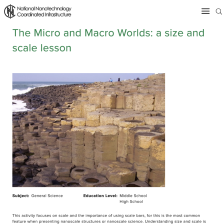
This lesson, presented by the National Nanotechnology Coordinated Infrastructure, covers the general concepts of size and scale by discussing the micro and macro worlds. The activity focuses on using scale bars as this is "the most common feature when presenting nanoscale structures or naonoscale science." Students will also learn about different scales of measure which is fundamental to learning about nanotechnology. A Teacher Preparation Guide and PowerPoint slides are included.
(View More)
This 9-page unpublished paper, provided by Northwestern Connecticut Community College (NCCC), discusses the impact of NCCC's grant project that aimed to increase "student interest and capability to enter STEM programs and technical careers by building a pipeline from middle school to high school, on to college and into the workforce." For the project, NCCC partnered with Torrington High School to provide teachers with support and professional development training, externships in industry, and materials and funds needed to implement technical lessons into classroom instruction. The paper goes into detail on the project and its results, describing the impact it had on teachers, students, and curriculum development at Torrington High School. Included are excerpts from interviews with high school teachers that participated in the project.
Classroom materials developed as a part of the project are available to view separately.
(View More)
In this activity, provided by Digital World Biology, students use free, online biotechnology resources to investigate how well different commercial antibodies might work against SARS-CoV-2 variants. Students will first use NextStrain.org to locate and detect the spike proteins of emerging SARS-CoV-2 variants. Next, they will "use iCn3D and BLAST to align the sequence of the variant spike protein to a sequence of a spike protein that is bound to a commercial antibody." After identifying mutations in the antibody binding site, students will then compare "chemical bonds that would be formed between the original amino acid and the antibody with the predicted bonds that could be formed by the variant amino acid and predict whether their antibody will be effective against their variant."
Included is a 3-page instructor guide detailing each step of the activity, a 2-page student instructional sheet, activity materials, such as data spreadsheets, and an informational video on using...
(View More)
This 172-page resource was developed as a reference guide for the IT Skill Standards 2020 and Beyond project grant, explaining in step-by-step detail how to collaborate with employers to develop future-facing technical skill standards and then use that work to align curriculum to workforce needs. This guide also provides a hard copy of the final version "products" the grant created (KSA+Ts - knowledge, skills, abilities, and tasks, key performance indicators, employability skills, student learning outcomes, and degree expectations).
A companion report on the impacts and outcomes of the ITSS project is available to view separately.
(View More)
| Active ATE Centers | 15 |
| Active ATE Projects | 291 |
| ATE Resources | 6,967 |
| New Projects/Centers | 62 |
| New Resources | 59 |
ATE Resources by Subject Area
ATE Events by Subject Area
Upcoming Event: Workforce Development Institute 2026
Registration is now open for the American Association of Community Colleges' (AACC) annual Workforce Development Institute (WDI). The conference will be held January 28 through January 31, 2026, in New Orleans, Louisiana.
WDI will bring together community colleges faculty, industry leaders, and government partners committed to developing and strengthening the national workforce pipeline. Attendees will have the opportunity to engage with plenaries, exhibit halls, speakers panels, and executive-listening sessions across a variety of topic pertinent to community colleges and workforce development. Pre-conference programming is also available.
To learn more or to register for AACC's 2026 Workforce Development Institute, visit the conference's website.
(View More)

New Research: Increasing Cost of Community College Education
A new College Board report shows that the average published tuition and fees for in-district, full-time students at public two-year colleges in 2025–2026 reached $4,150, an increase of $110 from last year.
State-level prices varied widely, from $1,440 in California to $8,900 in Vermont, and only nine states saw no change or increases of less than 1%.
To learn more about trends in college tuition and financial aid, read the full report from College Board.
(View More)

Upcoming Virtual Event: Google's Generative AI Leader Training and Certification
Supported by Google Cloud's Career Launchpad in collaboration with the National Applied AI Consortium (NAAIC), the free virtual event, "Google's Generative AI Leader Training and Certification," will be held on January 16 and 23, 2026. Sessions will cover the fundamental principles of artificial intelligence (AI), current AI offerings, strategies to improve the output of generative models, and relevant AI-informed business strategies. Completion of the training program will prepare community college faculty for the Google Cloud Generative AI Leader Certification.
Virtual Training Sessions
- Session 1: January 16, 2026, 10:00AM to 4:30 PM EST
- Session 2: January 23, 2026, 10:00AM to 4:30 PM EST
- Office hours (optional): January 30, 2026, 2:30PM to 4 PM EST
To learn more or to apply for the training program, visit the NAAIC website.
(View More)