 List
List
ATE is Advanced Technological Education. With an emphasis on two-year colleges, the National Science Foundation's ATE program focuses on the education of technicians for the high-technology fields that drive our nation's economy.
CONNEX Update: With Special Guest Kirti Patel, CMO
Webinar
January 15
Join Chief Manufacturing Officer Kirti Patel for this informational webinar on new additions to the CONNEX platform. CONNEX Connecticut is an online platform that connects all U.S. manufacturers and suppliers with a single, accurate, and searchable supply-chain solution.
In this webinar, talk about:
- CONNEX Marketplace Site Updates: Hear about new features and functionality recently added
- Workforce Module: Introducing CONNEX Marketplace’s Workforce Module. This module provides access to workforce organizations and educators that shape and develop the next generation of Connecticut’s manufacturing workforce.
(View More)
Generative AI and Microsoft Copilot Training for Community College Faculty and Staff: 101
Webinar
January 15
This session is designed for community college faculty and staff exploring the fundamentals of Generative AI and Microsoft Copilot. Topics include Generative AI and responsible AI use, effective prompting techniques, and real-world applications in education. This session will provide practical insights and hands-on guidance to help integrate AI tools into your work.
(View More)
NCyTE Monthly Meeting: Evaluating CAE Cybersecurity Career Outcomes
Webinar
January 16
Join NCyTE’s January Monthly Meeting where Dr. Tobi West will share her research into how well Centers of Academic Excellence in Cybersecurity (CAE-C) programs prepare students for cybersecurity careers.
The session will highlight findings from a ten-month study involving 281 students from 36 colleges and universities across the U.S. The research examined the types of cybersecurity jobs CAE alumni secured after graduation and assessed how closely those positions align with the 52 cybersecurity work roles defined in the recently updated NICE Workforce Framework for Cybersecurity (NIST).
Presenter: Dr. Tobi West
(View More)
Google's Generative AI Leader Training and Certification
Meeting
January 16 Online
Become one of the first go-to resources and thought leaders in Generative AI Leadership, enhancing your visibility and influence within the organization. This no-cost opportunity, funded by Google Cloud’s Career Launchpad, and in collaboration with NAAIC, will prepare community college faculty for the Google Cloud Generative AI Leader certification.
The training will cover:
- Fundamentals of Gen AI
- Google Cloud's Gen AI offerings
- Techniques to improve Gen AI model output
- Gen AI business strategies
Training sessions
Session 1: January 16, 2026, 10 to 4:30 PM EST, online
Session 2: January 23, 2026, 10 to 4:30 PM EST, online
Office hours (optional): January 30, 2:30 to 4 PM EST, online
Certification exam deadline: January 31, 2026
(View More)
Octet Bio-Layer Interferometry: Accelerating Breakthroughs in Biologics Development
Webinar
January 16
Discover how Octet Bio-Layer Interferometry (BLI) is transforming the landscape of biologics research and development. In this webinar, Dr. Rodrigo Jacamo will showcase the unmatched capabilities of Octet BLI in streamlining workflows across cell line development, antibody discovery, drug development, cell therapy, and gene therapy. Whether you're optimizing clone selection, characterizing binding kinetics, or accelerating therapeutic screening, Octet BLI delivers real-time, label-free analysis with exceptional sensitivity and throughput.
Learn how leading scientists are leveraging Octet systems to reduce timelines, increase data confidence, and make faster decisions in critical stages of development. Experts will walk you through application-specific case studies, demonstrate assay versatility, and answer your questions live.
(View More)
SPIE Photonics West 2026
Conference
January 19 Online
SPIE Photonics West is the premier event for lasers, biomedical optics, optoelectronics, and technologies supporting biophotonic, quantum, and vision applications.
View the lineup of outstanding plenary speakers from around the globe. Select advanced training from 60 course options. Discuss your product requirements with top optics and photonics suppliers at any of the five exhibitions throughout the week, and participate in the strong industry program – this year now on three stages!
(View More)
Generative AI and Microsoft Copilot for Community College Faculty: 102
Webinar
January 20
This follow-up webinar is designed for faculty looking to integrate Generative AI and Microsoft Copilot into their curriculum. We'll start with a brief review of Copilot Chat, then explore practical strategies for incorporating AI-driven tools into lesson plans. We'll also examine real-world use cases from various disciplines.
(View More)
Generative AI and Microsoft Copilot for Community College Faculty: 102
Webinar
January 20
This follow-up webinar is designed for faculty looking to integrate Generative AI and Microsoft Copilot into their curriculum. We'll start with a brief review of Copilot Chat, then explore practical strategies for incorporating AI-driven tools into lesson plans. We'll also examine real-world use cases from various disciplines.
(View More)
Community Capabilities Webinar | The NCERC Experience
Webinar
January 21
The National Corn-to-Ethanol Research Center (NCERC) at Southern Illinois University Edwardsville is a nationally recognized Biorefining Center of Excellence dedicated to advancing the commercialization of biofuels, biochemicals, biomaterials, and other bio-based products. NCERC offers a comprehensive range of workforce development programs, including job shadowing, internships, graduate assistantships, and visiting research fellow programs, as well as professional workshops. Through the various programs, trainees gain real-world experience inside a functioning biomanufacturing pilot plant and are equipped with the skills needed to lead in a rapidly evolving biobased economy.
(View More)
Microsoft Azure AI-900 Training
Webinar
January 23
Are you a community college faculty member eager to equip your students with the AI skills employers are seeking right now? To help you become a confident instructor of Microsoft AI content, you are invited to apply for a complimentary, two-day train-the-trainer bootcamp designed to fully prepare you for the AI-900: Microsoft Azure AI Fundamentals certification. This intensive program also introduces you to Microsoft Learn for Educators (MSLE), offering access to official courseware, hands-on labs, and curated teaching resources.
The online training will be delivered by Black Dog Black Cat, a Microsoft Certified Trainer, and will include materials, labs, and resources. AI-900: Microsoft Azure AI Fundamentals certification exam vouchers will be available to all educators who successfully complete both training sessions. Online proctoring will be available at a discounted rate of ~$30 and instructions on how to take your certification exam online will be provided.
Following the training, a Teams channel will be available for the MSLE AI Bootcamp educators, including training materials, session recordings, and a forum to post your questions regarding MSLE access and the AI-900 certification exam.
(View More)
Introducing BioSuite Virtual: Immersive Biomanufacturing Training for Tomorrow’s Workforce
Webinar
January 23
Join Jared DeCoste and Dan Beaupré of Prism Immersive for an introduction to BioSuite Virtual—a mixed-reality training platform developed to expand access to high-quality, job-ready biomanufacturing education.
Developed with industry and academic support and integrated with BioSciences Core Skills Institute (BCSI) credentials, BioSuite Virtual enables learners to perform end-to-end upstream bioprocesses—from bioreactor assembly and aseptic technique to fermentation monitoring and analysis—within an interactive virtual laboratory. Its innovative learning design contextualizes the development of critical skills with the guidance and flexibility needed for effective, self-paced learning.
(View More)
Spray Drone End User Conference
Conference
January 25 Kansas City, MO
The Spray Drone End User Conference is the only event built for the industry, by the industry. This five-day, full-scope experience brings together the best minds in aerial application, drone technology, and ag business to help you sharpen your skills, grow your network, and move your business forward. This is the largest ag drone-focused event in North America.
In-person and virtual options available.
(View More)
AMTEC Institute Community of Practice: BILT Basics
Webinar
January 27
Join this an engaging introduction to the Business and Industry Leadership Team (BILT) Model—a collaborative approach that keeps educational programs aligned with industry needs. Learn about the model’s core principles and how employer input can boost program relevance. BILT is recognized nationally for transforming how educators and industry work together, and you’ll see how it can strengthen partnerships with local employers.
(View More)
ATE Projects and Centers

Mfg
Advanced Manufacturing Technologies topics include:
- Additive manufacturing
- Automotive manufacturing
- General manufacturing
Ag/Env
Agricultural and Environmental Technologies topics include:
- Agriculture and aquaculture
- Environmental technologies
- Natural resources
- Nuclear power
- Solar energy
- Wind power
Bio/Chem
Bio and Chemical Technologies topics include:
- Biotechnology
- Chemical and process technologies
Eng
Engineering Technologies topics include:
- Electronics and controls
- General engineering
- Marine technologies
- Materials technologies
- Optics
- Space technologies
Gen
General Advanced Technological Education topics include:
- Evaluation
- Learning research
- Recruitment
- Teacher preparation
Info
Information and Security Technologies topics include:
- Geospatial technologies
- Information and communications technologies
- Logistics
- Security, information assurance, and forensics
Nano
Micro and Nanotechnologies topics include:
- MEMS
- Microsystems
- Semiconductors

This is a course description for Massachusetts Institute of Technology’s (MIT) course 6.033, Computer System Engineering. It covers topics on the engineering of computer software and hardware systems, such as: techniques for controlling complexity; strong modularity using client-server design, virtual memory, and threads; networks; atomicity and coordination of parallel activities; recovery and reliability; privacy, security, and encryption; and impact of computer systems on society. The page also includes links to video lectures, lectures notes, assignments, exams, additional readings and projects. This course description is part of MIT OpenCourseWare, an initiative of the Massachusetts Institute of Technology to put all of the educational materials from its undergraduate and graduate-level courses online and make them freely accessible.
(View More)

Is nanotechnology present in our everyday lives? This is the question the website looks to address. Presented by the National Nanotechnology Coordinated Infrastructure, this page highlights many aspects of nanotechnology that we experience on a daily basis. Such things as a moth’s eye or a butterfly’s wing do not immediately conjure up ideas about nanotechnology, but this demonstration will change that. Many natural marvels give engineers ideas about new technology and even how to better use current. Even though brief, this site examines an important, and mostly overlooked, area of nanotechnology.
(View More)

This issue of J ATE, published by Portland Community College, is issue two of the journal's second volume and focuses on the theme of undergraduate research at community and technical colleges across the United States. J ATE is a peer-reviewed technical journal focused on community college faculty and staff who work with technician education. This journal is cross-disciplinary and encompasses all technologies under the National Science Foundation (NSF) Advanced Technological Education (ATE) Program. Some of these technologies include: Micro Nano, Biotechnology, Autonomous Technology, Cyber Security, Advanced Manufacturing, Earth Sciences, Agriculture Technology, Energy, and Welding. Some topics that cross cut across all disciplines of technician education are also covered. Those topics include: Evaluation, Mentoring, Undergraduate Research, and Applied Technician Research.
This 115-page issue of J ATE includes ten full articles and five guest letters written by ATE professionals....
(View More)

Biofab Explorer, provided by CAST, is a "free career guidance resource created to attract and inspire students to the emerging field of biofabrication." On the front page of Biofab Explorer, learners can read about the biofabrication process, watch biofab case study videos, and explore the biofab careers page, which includes video testimonials and information on several careers in biotechnology. Also featured are biofab challenges, which make up a "series of work-based learning simulations that will model what it is like to work in the biofabrication industry." Throughout the challenges, students will practice real-world skills, such as data analysis, communication, and observation. Included are student worksheets and presentation slides. Additionally, Biofab Explorer includes information for teachers regarding using resources on the website for in-class activities.
(View More)
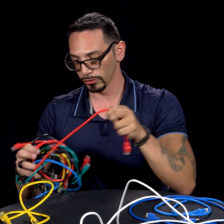
This video from the Internet Scout Research Group is part of a series that highlights student success stories related to advanced technological education (ATE) programs. In this video, Elias Marcet discusses his experiences with the Bachelor's program in cybersecurity at Miami Dade College. Elias describes his journey to fully enrolling in Miami Dade, joining the cybersecurity programming, and eventually being employed by Amazon. Funding for the program from the National Science Foundation (NSF) is also explored.
The video runs 5:44 minutes in length.
(View More)
| Active ATE Centers | 15 |
| Active ATE Projects | 289 |
| ATE Resources | 6,992 |
| New Projects/Centers | 62 |
| New Resources | 60 |
ATE Resources by Subject Area
ATE Events by Subject Area
New Issue: Community College Journal
The December/January issue of the American Association of Community Colleges’ (AACC) Community College Journal is now available online and in print through subscription. A featured publication by AACC, this journal provides contemporary information, insights, strategies, and connections for those in academia, industry, government, and workforce development.
The latest issue highlights community colleges' efforts to:
- Address rural healthcare shortages by training and retaining nurses
- Expand programs for truck drivers to meet growing workforce needs
- Connect curricula more strongly to employment and opportunity
AACC's December/January publication of the Community College Journal can be accessed online here, and archived issues can be viewed in AACC’s library.
(View More)
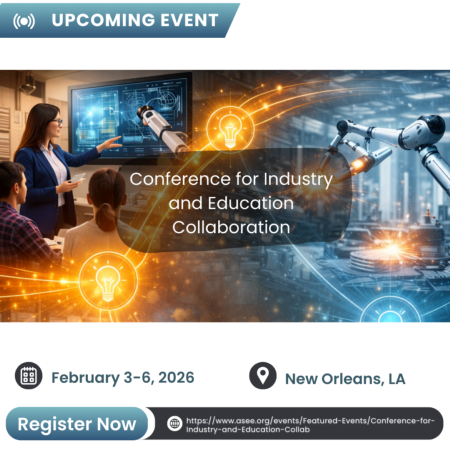
Upcoming Event: Conference for Industry and Education Collaboration (CIEC)
The 50th annual American Society for Engineering Education (ASEE) Conference for Industry and Education Collaboration (CIEC) will take place February 3–6, 2026, in New Orleans, Louisiana. Organized by ASEE’s Cooperative and Experiential Education Division (CEED), College Industry Partnership Division (CIPD), Continuing, Professional, and Online Education Division (CPOED), and Engineering Technology Division (ETD), the conference brings together educators, government representatives, and industry professionals to build effective and sustainable partnerships.
Attendees will be able to engage in poster sessions, workshops, training programs, keynote presentations, and panel discussions. The theme for 2026 is “Transforming Tomorrow Together.”
For more information or to register, visit ASEE’s website.
(View More)

NSF Announces $30 Million Investment in STEM Research Centers
The U.S. National Science Foundation has announced a $30 million investment to establish NSF EPSCoR Centers of Research Excellence in Science and Technology (CREST) across the states of Montana, Idaho, and Louisiana. These new centers will seek to expand research efforts, deepen STEM knowledge, and strengthen workforce development in priority areas, including semiconductors, nanotechnology, and biotechnology.
EPSCoR CRESTs will act as research hubs that also aim to attract and prepare more students for careers in STEM disciplines.
- Montana: Montana Technological University will launch a center focused on converting local biomass, such as beetle-killed trees, into biochar and renewable energy sources.
- Idaho: Boise State University will establish the a center integrating semiconductor science into classroom experiences to advance workforce preparation.
- Louisiana: Lousiana State University (LSU) New Orleans and Shreveport will create centers for adaptive nanotechnology and biotechnology.
To learn more about this recent investment, visit NSF's website.
(View More)